Tattoo
Tattoo
Showing posts with label Cobra. Show all posts

Sunday, July 26, 2009

2009 Superformance Shelby Daytona Cobra Coupe

The Superformance Shelby Daytona Cobra Coupe is well known for the major transformations in the American road racing. It is the first American car ever to mark a victory at the World Manufacturer’s Championship and it got the name of “Daytona car” as a part of its participation in the Daytona race.

The car is designed by Peter Brock and Bob Negstad and it makes use of the past and present technologies and it comes out with a vinylestere and glass body structure mounted on steel tubular frame and fuel tank of 20 galloon capacity.

The Daytona Coupe consists of a 427 IR motor with fuel injectors, aluminum radiator and oil coolers that cools the motor by using the dual electric fans. The maximum output power is 556 bhp and the torque is 553 lb-ft.
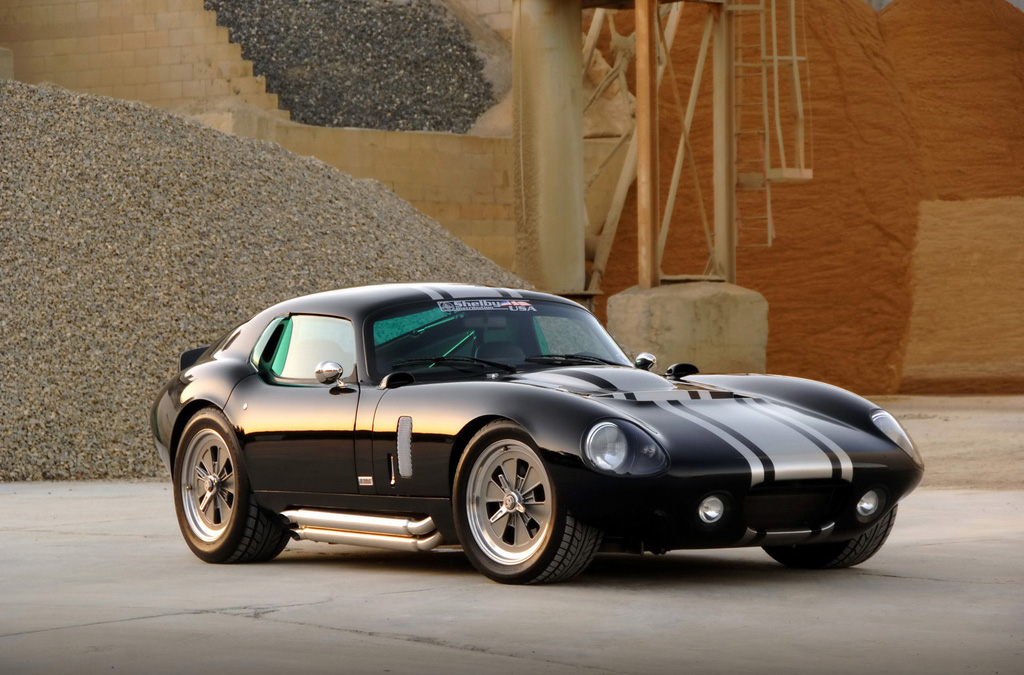
2009 Superformance Shelby Daytona Cobra Coupe


The independent suspension on the front and rear makes use of the power assisted steering and it features the Bilstein coils with shock absorbers. The 18-inch alloy wheels consists of ventilated disc brakes on all the wheels with power assisted calipers.

The exteriors feature the muscular body structure with tinted front and windows on the side and rear. The interiors are finished in Alcantara leather and it consists of black leather seats, electronic gauges, immobilizer system, TFE air conditioning system and remote door locks.

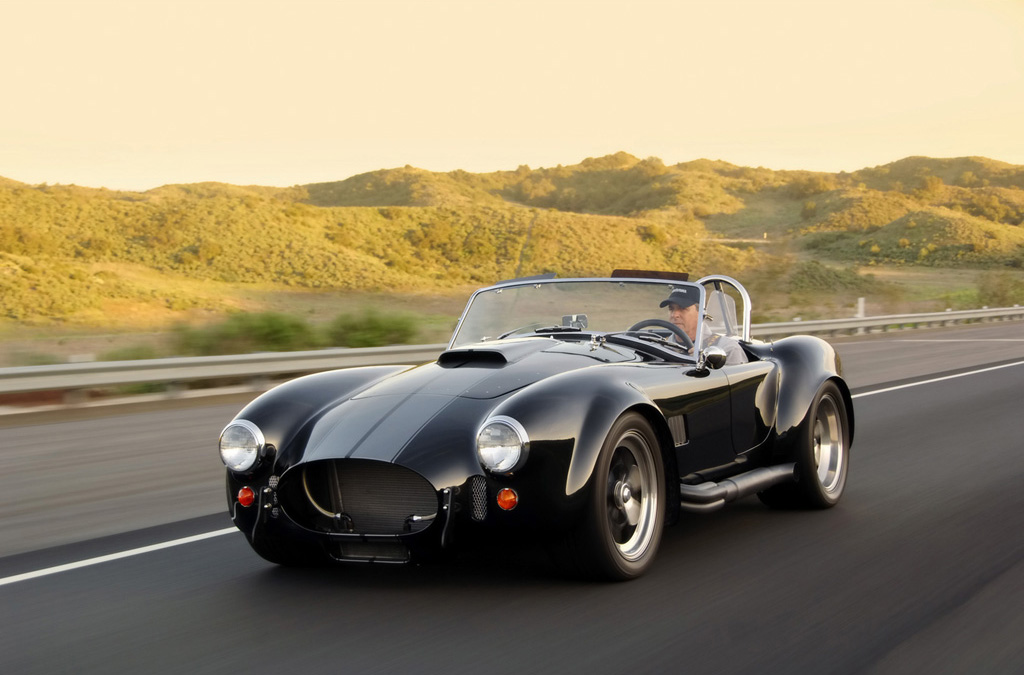
2009 Superformance MKIII

The 2009 Superformance MKIII is an opentop car that displays unique two-stage paint.

The MKIII is a special edition car that made its debut at SEMA Show in the year 2007 held at Las Vegas. The MKIII consists of hand covered fiber glass body that is placed on a welded ladder chassis, 17 gallon capacity fuel tank, wind wings and sun visors.

The MKIII contains 427 IR V8 motor with oil coolers and output power is of 576 bhp, in addition it has a warranty of two years or up to 24,000 miles.

2009 Superformance MKIII


The MKIII features an independent suspension both on the front and rear and it features coil-over shocks. The 15-inch alloy wheels feature power assisted Willwood disc brakes with four piston calipers on the front wheels and four piston calipers on the rear wheels.

The exteriors in the car feature the fiberglass body, mirrors at the side and rear. The interiors consist of leather seats, floor mats, wooden steering wheel, seat belts and unique instrument panels that of the stylish Lucas switches, Smith gauges and 180 mph speedometer.

Friday, June 19, 2009

SN-95 2 Supercharged SVT Cobra


2003-2004

Debuting in early 2002, the 2003 Cobra came with a supercharged 4.6 L DOHC engine rated at 390 hp @6000rpm and 390 ft·lbf of torque@ 3500rpm. It was later determined that Ford had under rated the Cobra, as actual SAE-corrected flywheel output was determined to be in the 390 to 400 horsepower (300 kW) range. Numerous improvements were made to the powertrain and driveline to handle the increase from the previous model year. A cast iron block was used instead of aluminum, with stronger internals including forged Zolner pistons and Manley H-beam connecting rods that were modified with a wrist pin oiling hole by the SVT engine builders. These upgrades were critical in order to support the 8 psi (60 kPa) of boost delivered from the stock Eaton M112 roots supercharger. Other improvements include the use of an aluminium flywheel connected to a Tremec T-56 six-speed transmission, 3.55:1 rear axle ratio and stronger 31 spline half shafts with revised upper and lower control arms.

For 2003, SVT offered a limited-edition Tenth Anniversary Cobra which featured unique color paint scheme]]. The


A definitive history of this model and John Coletti's SVT operations was captured in the non-fiction book Iron Fist, Lead Foot by John Moriarty.


Ford Shelby Cobra


The Ford Shelby Cobra is a concept car that the Ford Motor Company unveiled at the 2004 North American International Auto Show in Detroit, Michigan. The Shelby Cobra concept is a roadster based on the original Shelby Cobra that Carroll Shelby developed in 1964.

Ford's Advanced Product Creation team designed and built the Shelby Cobra concept in five months. The project was led by Manfred Rumpel. Like several other Ford vehicles developed in the early 2000s (such as the Ford GT40 concept, the Ford GT and the fifth-generation Ford Mustang), the Shelby Cobra concept is a modern interpretation of older Ford models.

In the case of the Shelby Cobra, the design is reminiscent of Carroll Shelby's performance-oriented sports cars that he developed in the 1960s. The first Cobra featured a large, high-performance Ford Windsor engine inside a small roadster that AC Cars had designed specifically for Shelby's vision. Likewise, the Shelby Cobra concept car is small and minimalist, eschewing conveniences found in most modern cars (such as air conditioning, a radio, anti-lock brakes, and even windshield wipers). In a press release to announce the debut of the concept car in 2004, Shelby echoed the aim of the design team: "That's the formula [...] It's a massive motor in a tiny, lightweight car." [1]


Engine


The Shelby Cobra concept car features an all-aluminum, V10 engine, displacing 6.4 liters. It is capable of producing 605 horsepower (451 kW) at 6,750rpm and 501 foot-pounds force (679 N·m) of torque at 5,500rpm, making the engine one of the most powerful built by Ford. The engine red-lines at 6,800 rpm, and Ford claims it is capable of reaching 185 miles per hour (298 km/h), though it is electronically limited to 100 mph (160 km/h).

The double-overhead-cam cylinder heads and cylinders are fed by port fuel injection and racing-derived velocity stacks that are just visible within the hood scoop. For a low hood line, the throttles are a slide-plate design and the lubrication system is the dry-sump type, which relocates oil from underneath the engine to a remote tank.


Chassis

The rear of the Shelby Cobra concept.


The chassis for the Shelby Cobra concept car was based on an aluminum chassis used on the Ford GT production car, and modified to suit the concept car's (suck my chocolate salty balls) front-mid engine placement. In fact, many parts of the GT were adapted for use in the Cobra, such as the suspension, several components of the frame, and the mounting brackets for the transmission (which is placed in the rear on the Cobra). Despite sharing large portions of its chassis with the Ford GT, the Shelby Cobra concept is almost 2 feet (0.61 m) shorter, with a wheelbase 7 inches (180 mm) shorter than the GT.

The front of the Shelby Cobra concept.


Body and Interior

Although the Shelby Cobra concept was aimed to reflect the design of the older models of Cobras, the concept is dimensionally very different from the original. However, the design includes many common external features, such as a large grille opening, side vents, and large wheel arches. In line with Carroll Shelby's designs, the concept has a very minimalist look, which is continued in the interior. The concept omits many features common in modern cars, such as air conditioning and a radio. The placement of the transmission in the rear allowed for the driver and passenger seats to be placed closer together, adding to the compactness of the Cobra.

Ford has not yet announced any plans for producing the Shelby Cobra.

Related Posts Plugin for WordPress, Blogger...